
BOKOD ANODIZING | +36 70 636 0014 | eloxalas@gmail.com | Telephely: 2840 Oroszlány, külterület 0722 hrsz.


Aluminum anodizing
What is anodizing?
Anodizing – also known as anodic oxidation – is an electrochemical surface treatment process that creates an aluminum oxide layer of controlled thickness on the surface of the aluminum. It is not a subsequently applied coating, but rather the transformation of the base material's own surface, which is extremely durable and forms an organic part of the component.
Steps of the process
Degreasing, etching or satin finishing if necessary; followed by an electrolytic bath where the aluminum is connected as the anode in the circuit, forming an oxide layer of controlled thickness. Depending on requirements, black or color dyeing follows, and finally pore sealing, which closes the pores of the oxide layer.
The advantages of anodizing
Excellent corrosion resistance, higher surface hardness and wear resistance, decorative, uniform surface, UV-resistant, durable colors. The oxide layer is electrically insulating, the technology is environmentally friendly—no peeling coating is formed—the component has a long lifespan and minimal maintenance requirements.
Who do we work for?
We accept orders from small and medium-sized enterprises to multinational industrial corporations. Our partners typically come from the fields of healthcare and medical technology, high-tech, the space industry, the automotive industry, industrial automation, the packaging industry, industrial water treatment, as well as the defense and aerospace industries.


Aluminum passivation SurTec 650
A chemical conversion surface treatment process in which a thin, continuous, chromium(III)-containing protective layer is formed on the aluminum surface. It improves corrosion resistance, stabilizes the electrical properties of the surface, and provides an excellent base for further surface treatments such as painting, powder coating, and bonding.
SurTec 650 is based on TCP (Trivalent Chromium Process) technology and is chromium(VI)-free. No thick coating is formed, only a layer of a few microns, so the dimensions of the part remain practically unchanged – making it particularly suitable for high-precision, tight-tolerance parts. The conversion layers preserve the electrical conductivity and surface properties of the aluminum. We also provide professional advice to help you choose the appropriate surface treatment technology.
Corrosion protection
Passivation improves the corrosion resistance of aluminum and is also recommended for industrial applications requiring enhanced corrosion resistance.
Stable electrical properties
It stabilizes surface electrical resistance and preserves the electrical conductivity of aluminum—recommended for electrically conductive components.
Before gluing and painting
It provides excellent adhesion for bonded joints and forms a suitable base surface for powder coating and wet painting.
Spot welding
It promotes the application of spot welding technologies and is suitable for surface preparation prior to spot welding.
Applications
Electronic and electrotechnical components, automotive components, mechanical engineering structural elements, medical devices, industrial automation systems, aerospace and other high-reliability applications.
Standards
The technology meets the requirements of MIL-DTL-5541, MIL-DTL-81706, and EN 12487 standards, among others. It is chromium(VI)-free, thus complying with modern environmental regulations.
From our work
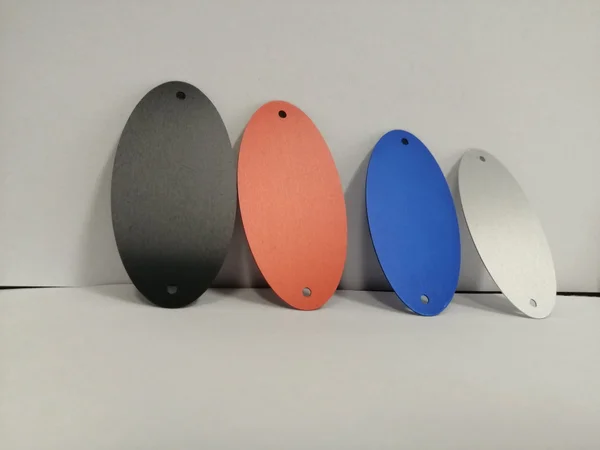
The following photos were taken of real aluminum parts surface-treated in our plant. The images show the appearance of natural, colored, black, and hard-anodized surfaces.


